Showing posts with label David Thorpe. Show all posts

When Writers Try to Predict the Future - David Thorpe

I'm very excited because this month I am to achieve a long-time ambition of being on stage at a literary festival. Not just any literary festival, but Hay, and not just once but twice! I'm not at all nervous, no.

Both events are part of the festival's 'green' strand.

The first will be about my new non-fiction book The One Planet Life where I will be in conversation with Jane Davidson, director of INSPIRE and a fellow patron of the One Planet Council.

The second will be to do with children's writing and climate fiction, where I will be joined by Saci Lloyd, Jane, and climate change campaigner George Marshall. I hope other members of the Facebook group of cli-fi authors will be there, too.

Saci, plus other cli-fi authors, took part in a week of activity on the Guardian's children's books website last month about writing about ecological and environmental matters for children, culminating in a Twitter chat [#GdnEcoChat] on the evening of World Book Night with Frank Cottrell-Boyce, Kate Kelly, Sarah Holding, Tony Bradman and others.  The Guardian's record of it is here.

One of the questions that was asked was: is cli-fi just a passing fad? My answer, which was favourited a few times, was: 'NO! We've only just begun! One day all books will contain an element of cli-fi. They'll have to.'

It's now recognised by almost everybody that climate change is real and happening and caused by human beings burning fossil fuels. Any story that is set in the future which paints a picture of a world that hasn't been affected by climate change in one way or another will just look daft, especially if read in a few years' time.

It doesn't have to have disasters in it, it doesn't have to be a dystopia and it doesn't have to be science fiction. The lives of any characters, whether living 10, 50 or 200 years in the future, will have been affected in one way or another, whether it is how they get about, what the technology is like, what their home is like, or where they live.

I usually write about the near future. Stormteller and Hybrids both take current trends and extrapolate them, but the former is almost exclusively cli-fi and the latter only contains one tiny nod to it: a description of a swollen River Thames in London.

The novel I'm writing now is set in 2089-2104 and, while it is not about climate change at all, I still have to describe the ways that people get about (in their self-driving electric cars, rapid transit buses, or high-speed trains), the buildings that people live and work in (where attempts have been made, successfully or not, to retrofit them to save and/or generate electricity and to bring nature back into cities), the food they eat and where it comes from, the energy they use (all kinds of renewables), where the coastline happens to be (usually not where it is now) and what has happened to former seafronts.

This is a radical reimagining of life. It's neither dystopic nor utopian, just looking at how life and society might have to adapt in one way or another.

In this election there has been little talk of climate change, but all of the main parties (even UKIP, but with the striking exception of the DUP) recognise the huge contribution the low carbon or clean technology sector already makes to the UK economy, employing as it does close to one million people. Inevitably this contribution will continue to rise. Some parties (LibDems, Greens) attach more importance to the way that green jobs can make life better and improve the economy generally. It's a win-win-win scenario.

Yes, predicting the future is notoriously difficult, but the predictions about climate change have, ever since 1993, been consistent in saying that a certain list of impacts is likely to happen; exactly when is less certain.

We also know that human nature tends to leave everything to the last minute, only responding to disasters when they are imminent or actually happening.

Put the two together and you begin to get an idea of the way things might go; except that climate change is not one disaster but a whole succession of transformations with all sorts of ramifications that will continue for the next few centuries.

In the past, quite a few writers who have tried to predict the future have found life imitating art, such as Ray Bradbury's description of “little seashells… thimble radios” that brought an “electronic ocean of sound, of music and talk and music and talk” in Farenheit 451; John Brunner’s description of electric cars powered by fuel cells and Detroit as an abandoned wasteland in Stand on Zanzibar; tablet computers in Arthur C Clarke's 2001: A Space Oddysey; Google Glass type goggles in Willliam Gibson's Neuromancer; not to mention ubiquitous people watching (CCTV) in Orwell's 1984.

Not written for kids? Actually, almost all of these books I read as a teenager.

I will leave you with two thoughts: encouragement to contemporary writers not to ignore developments that are consistent with a world predicted by climate science, and the infographic below that I discovered, which records many predictions made by writers that have come to pass.


David Thorpe is the author of cli-fi YA fantasy Stormteller and the YA SF Hybrids.

Wonder or Despair: What Are We Giving our Kids to Think About? - David Thorpe

This week I was doing an event at our local library, in Ammanford, Carmarthenshire, which has just undergone a very nice refit and upgrade. It's always great to see libraries being renovated and improved rather than closed, which happens all too often these days.

For my event I was put in the section containing racks of books for older children and young adults and graphic novels. Casting my eye across them, and having read quite a few, I was struck by the overwhelming mood of many of them: dystopic and preoccupied with doom, gloom, death, hate, angst.

I suddenly felt sorry for children if that was the entirety of their choice of reading matter.

Of course, I am guilty of writing books that probably fall into this category as well, but I suppose what depressed me was seeing that this type of book is mostly what either the librarians or publishers in general think the kids want to read.

Well, maybe they do. But one book stood out amongst all the others as being exceptionally different. I know, because I've read it and it's by one of my favourite – and the country's most celebrated – authors.

It is a book of wonder, that celebrates creativity, being different, and the splendours of the natural world.

It does not follow any particular page-turning plot structure. Nor does it correspond to any particular genre, although I suppose you could call it in the end fantasy or magical realism, but really it's about imagination.

(The author is on record as saying: "When people began to describe me as a magic realist I thought - I'm just me.")

David Almond's My Name is Mina is about a girl who doesn't fit in, who finds that the constrictive pressures of the school system are too much for her huge personality.

It celebrates learning at your own pace, following your instinct, writing, a love of words and language, finding the marvellous in the everyday, and so on.

Above: a page from the book.

At the same time you can feel the anger that Almond has towards the school system and teachers caught within it. No doubt he is drawing upon his own experience of being a teacher for five years.

I should say that any child reading this, who feels a little bit different, will sense validation for their unique perspective on life.

And anyone else, who was ever looked at a bird, or the sky, or a leaf on a tree and just wondered how it came into being, will also find validation for their purposeless gaze.

I have put passages in my books a bit like this, but I have not ever considered writing a whole book like this. It was a revelation to read.

This is not a book that trades upon the existence of a sense of desperation for its page turning qualities. Although it is in part a kind of an us-versus-them story, Mina's reactions to adversity, particularly from her teacher, are always gentle and loving.

The book shows readers another way to be, and that is to its immense credit. It's a book that takes its time even though it is short.

It's interspersed with lots of exercises, called experiments, for children to try, almost like a self-help book.

It takes courage to go against the grain and write a book like this. Too many writers think that they just have to follow the herd or go with publishing trends. It's your own vision that's the most important and that will last beyond such trends.

David Thorpe is the author of clifi YA fantasy Stormteller and the SF dystopia Hybrids.

Birds of a Feather are Gathering - David Thorpe

Since my post last month on cli-fi (climate fiction) there have been a couple of very nice developments involving authors crawling out of their garretts to coalesce around shared interests.

Climate Fiction Facebook group

This last post caused a flutter on Twitter which resulted in several climate fiction authors deciding to get together. There's safety in numbers.

The best platform we could find was to set up a Facebook group. Not ideal since not everyone is on Facebook: apologies to Nick Green!

Nevertheless anyone who either considers themselves be writing fiction connected with climate change, or who even touches upon it in some of their work, is welcome to join.

The aim of the group is to share experience, marketing, information, etc. the members so far include, besides yours truly:


One of our first achievements has been to be offered an event at next May's Hay Festival debating Cli-Fi. The discussion will be chaired by Jane Davidson, former Welsh Environment Minister, and will include two other panellists besides myself:
  1. Saci Lloyd author of The Carbon Diaries
  2. George Marshall, author of Don't Even Think About It: Why Our Brains Are Brains Are Wired to Ignore Climate Change.
This is very exciting because I have always wanted to be on a panel at the Hay Festival! The discussion will take place on May 22 at 5.30 p.m. We hope to see you there.

Welsh Branch of SCBWI

The second exciting development is a new incarnation of the Welsh branch of the Society for Children's Book Writers and Illustrators. 

As many of you will know this fantastic organisation has been going for about a decade in the UK and has some very dynamic regional groups. I was a member of about 6 to 8 years ago at which time I tried to start a Welsh branch, but it fell apart because members were too far apart.

(As an aside, it gave rise to the Dragontongue blog, which eventually merged with this one).

With the advent of some new Welsh writers joining SCBWI there has recently been a new impetus to start a group. At the moment it is only seeming to reach a saturation point (this is the point of geographical density at which writers will deign to venture out of their studios and coalesce together in a mutually agreed venue) in the south of Wales. Writers and illustrators up north in gog-land will have to wait.

Those joining up so far and signed up to the Facebook page include:

the regional coordinator


Our first South Wales meeting will be this Saturday at 11 AM in Calon Cafe and Interiors, 2 Mansel Street, SA31 1QX Carmarthen. Anyone is welcome to attend. I'm looking forward to it.

We will also be meeting at 2pm on Sunday 29 March at the Cardiff Children's Literature Festival, which any of you might also like to attend, and where we will be joining up with Malachy Doyle who has a session at 5 PM.

As they say here, Croeso i Bawb!

David Thorpe is the author of clifi YA fantasy Stormteller and the SF dystopia Hybrids. 

Can Imagination Change the World for the Better? – David Thorpe

Ever since 1962 when both Rachel Carson’s Silent Spring and JG Ballard's The Drowned World (number one in his 'disaster quartet') were published, tens of thousands of non-fiction but perhaps only scores of fiction titles have addressed environmental and, specifically, climate change-related issues.

Ballard's quartet has been cited as an early example of 'climate fiction' or 'clifi', identified as a new label by the journalist Dan Bloom.  Climate fiction specifically contains references to climate change. I interview Dan about it here.

I would say that there are perhaps more clifi books for children/teens than adults.

Ian McEwan's Solaror Margaret Atwood's Madaddam trilogy are examples of clifi for adults.
Love in the Time of Global Warming by Francesca Lia Block, Saci Lloyd's The Carbon Diaries 2015, The Ward  by Jordana Frankel, After the Snow by S. D. Crockett and Georgia Clark’s Parched are examples of clifi books for older children. More are here.

But can fiction ever change minds? Or does it merely confirm existing attitudes in the mind of the reader who chooses to read a book of that nature?

And are more clifi titles aimed at children because their enquiring minds are supposed to be more open?

These questions are thrown into relief by research showing that logic and reason count for little in debates about the reality of climate change among adults.

Much clifi has concentrated on the destructive aspects of climate change, being variants of dystopian or disaster novels. New writer Paulo Bacigalupi, author of The Water Knife, has even coined a new term: "accidental future" novels, i.e. novels that describe an unintended consequence of present human activity.

There is a greater challenge, however, that fewer writers are engaging in with fiction – although plenty have in non-fiction – and that is to create stories in which people successfully tackle climate change, devising solutions that rise to the challenges.

There are a few, beginning with Ernest Callenbach's Ecotopia (1975) and Marge Piercy's Woman on the Edge of Time.   But can you think of any for children?

I believe it is essential that children are given hope that the future will not be necessarily full of catastrophe.

We should be empowering them. After all, so many children's books are supposed to do this, aren't they? "You can fulfil your dream. You can beat the bully. You can defeat the enemy."

But climate change is not something tangible or immediate, it is a vast and vague. It's scary and discouraging.
If we are to stimulate the imagination of the world's children so they do not feel hopeless and disempowered by the overwhelming scale and prospects of climate change, fiction must play a vital role in helping them envisage how they can successfully live in the future.

The winner of the Guardian Children's Book Prize 2014, Piers Torday's The Last Wild is a good example of an environmental fable that gives hope, but it is not about climate change.

Such fiction might show children what a successful future could be like and even paint a picture of a good place to be in that is realistic and possible. A future where not only are children given a full part to play in society, but society itself is structured in a way that works with, not against, nature.

There are plenty of non-fiction books that do this but non-fiction is for specialists (planners, politicians, engineers, architects), and fiction, especially if translated into film, can be for the masses.

Fiction reaches places that non-fiction can never reach.

So, writers, how about it? David Thorpe is the author of clifi YA fantasy Stormteller and the SF dystopia Hybrids.

What distinguishes books for adults from those for teenagers? - David Thorpe

What is it that distinguishes a book written for adults where children are the main characters and one written for children, where children are the main characters?

When I am writing for children or teenagers at the back of my mind is always this question of the difference between the two.

Here are the opening sentences of In The Country of Men by Hisham Matar, which was shortlisted for the Man-Booker Prize and the Guardian First Book Award. The narrator is recalling a time when he was nine years old:

"I recall now that last summer before I was sent away. It was 1979 and the sun was everywhere. Tripoli lay brilliant and still beneath it. Every person, animal and and went in desperate search for shade, those occasional grey patches of mercy carved into the white of everything."

The novel describes the gradual discovery by the child of his father's involvement in anti-revolutionary activity and what this means, and his desperate love for his mother.

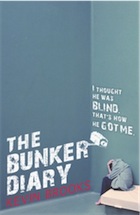
Here are the opening sentences of The Bunker Diary by Kevin Brooks, which controversially won the Carnegie Medal in 2014:

"10.00 a.m."This is what I know. I'm in a low-ceilnged rectangular building made entirely of whitewashed concrete. It's about twelve metres wide and eighteen metres long. A corridor runs down the middle of the building, with a smaller corridor leading off to a lift shaft just over halfway down. There are six little rooms along the main corridor, three on either side."

Much has been written about Brooks' book and whether it is suitable for children, so I'm not going to stray into that territory. You might consider that I have chosen a non-typical example, but many children's books deal with uncomfortable themes and issues.

Both of these openings are physical descriptions which imply a sense of claustrophobia. They perfectly set the scene for what is to follow, which only gets worse.

The two books have several more things in common:

  • there is no happy ending in either of them; 
  • very unpleasant things happen along the way;
  • the main character is not conventionally likeable.

You can see other parallels from these extracts: the language in both is direct, the sentences straightforward. These stylistic points are undoubtedly a requirement for writing for children. But one can equally find instances of quite 'literary' writing in books for children, for example in the earlier novels of, say, Philip Pullman, such as A Ruby in the Smoke.

The Bunker Diary deals with important psychological and philosophical themes, that are uncomfortable to contemplate. So does Matar's book.

One aspect which perhaps distinguishes In The Country of Men (and other novels for adults) from most novels written for children is the retrospective angle: the narrator is now about 25 years old, and the narrative eventually catches up with him. This is less common in writing for children.

Another aspect that might signify a difference is non-linear storytelling, in which the narrative darts around in time. This is, again, less common in writing for children (however I did use this technique in my new novel Stormteller and, whilst I can't think of one at the moment, I'm sure I've read other children's books which do this).

The other observations to make about the difference between them are the setting (Gaddafi's Libya compared to contemporary London) and the degree of sophistication in the form of prior knowledge or experience that is assumed in the writing of Matar's book.

So to answer my original question, all other thngs being equal, the main aspect I am monitoring as I write for children rather than for adults is constantly gauging that level so it is pitched correctly.

I'd be very interested to know what you think about this topic?

David Thorpe is the author of Stormteller and Hybrids.

The inspiration for my new novel - David Thorpe

Stormteller David Thorpe
My first novel in several years is out this week – Like Hybrids it's still YA, it's still set in the future, but it's very different in subject matter. I thought it might be interesting to talk about why I wanted to write it.

I lived in mid-Wales, where Stormteller is set, for nearly 20 years. After separating from my first wife I eventually landed up in Taliesin, partly because I was attracted to a place named after Wales' legendary bard.

I know the landscape almost as well as I know my back garden now, having walked over much of it. I always felt when I moved to this edge of the British Isles from London that here, unlike most places, the skin of the present is thin: you can feel the vibrations from the past still reverberating down the centuries like thunder beneath your feet.

Just inland from Taliesin village is a collapsed dolmen that is given the name 'Taliesin's grave' – though it is much older than that.


Between my house at that time and the sea, lies Borth bog: you may remember the images in the media last winter when flames were leaping across it from burning peat despite the snow: spooky.


And then Borth itself: a long sliver of a town that shouldn't be there, streamed onto a spur of land against the glint of the sea, on a section of coast that is the most vulnerable in the whole of Wales to storm surges. Again, it was in the media last winter when it was attacked by giant waves.


The spur continues to Ynys Las, a nature reserve of sand dunes opposite the Dyfi estuary from Aberdyfi – a colony of English retirees and yachting people largely immune to the influence of the past.

Above it, however, by the Bearded Lake, is allegedly a footprint left by King Arthur when he passed this way, and north of there the mountain Cader Idris, Welsh for Seat of Arthur.

But the real stories that come from this area are older than Arthur's: the birth of Taliesin and Cantr'er Gwaelod, which is the tale of how the land that now lies beneath Cardigan Bay was drowned by the sea.

It's these, and the beautiful, wild and dramatic landscape, that sparked my imagination to write this novel.

Let me tell you the beginning of the first story: a mother had two children – a beautiful girl and a hideous boy with a hunched back. The girl wasn't a problem, she's not even part of the story, probably got married off to a Prince.

But the boy... the mother felt sorry for him. Perhaps the gift of wit and wisdom might make him popular so she could get him off her hands. So she laboured a year and a day to make a magic potion for him, but on the last day she left the servant boy, Gwion, in charge while she popped out. "Just stir: don't taste," she told him.

You can probably guess what happened next. The long and the short of it is that Gwion got to sample the potion and he received all the gifts intended for the son. He was the one who became Taliesin.

Nowadays, Taliesin is revered in Wales and beyond for his poetic and shamanic genius. But his talents should have belonged to someone else – the son, whose name is Afagddu. No one remembers him now, but Taliesin has a village and even an arts centre named after him.

So I thought: how would Afagddu feel? What would he want?

And this is a starting point for Stormteller.

As a rebirthed baby, Gwion floated down the Dyfi river to Ynyslas where he was found by a local prince, who named him Taliesin. That leads into the second story....

...with a tragic ending – the flooding of the land – that it seemed to me has echoes of the threat that Borth and the whole coast of Britain faces now and in the future: rising sea levels, more storms and extreme weather caused by climate change.

We all feel threatened by climate change. We feel powerless to do anything about it. So I wanted the novel partly to be about giving some degree of optimism. It's trying to look at the question of rewriting the endings of stories: ours – about climate change – and these two old legends.

It's easy to give into a sense of fatalism. I believe that we can all rewrite our stories, we at least have the power to do that. And this is true for the teenagers in the novel. But, as in life, there are always sacrifices to be made...

You can find out more about the background to the novel here.

What are agents looking for? – David Thorpe

I had the pleasure last month of attending the Agents' Party at Foyles bookshop on Charing Cross Road, London, organised by the Society of Children's Book Writers and Illustrators (SCBWI).

It was called a party, but I'd say that's stretching the term; despite the free wine and nibbles, gratefully received, this was a place to pay full attention.

The agents attending were a good cross-section. Those on the panel were:

  • Ella Kahn DKW Literary Agency
  • Jo Williamson Antony Harwood Ltd
  • Julia Churchill A.M. Heath Literary Agents
  • Lauren Pearson Curtis Brown
  • Penny Holroyde Caroline Sheldon Literary Agents
  • Yasmin Standen Standen Literary Agency.

There were also other agents in the room:
  • Alice Williams David Higham Associates
  • Bryony Woods DKW Literary Agency
  • Elizabeth Briggs LAW Literary Agents
  • Eve White and Jack Ramm Eve White Literary Agent
  • Hannah
 Whitty Plum Pudding Illustration
  • Louise Burns Andrew Mann Literary Agency.
In the assembly were up to 80 of us writers and illustrators. On the way in we were handed two badges to fill in and stick onto our clothing: one saying our name, and the other our favourite children's character.

I spotted at least one person who'd chosen a character from their own book. There's confidence for you.

Who did I choose? – Skellig, the brilliant creation from David Almond's beautiful novel, a broken winged human found in a garden shed who, maybe, has miraculous powers. I thought he might bring me good luck.

Thus protected, I entered the airy new seminar room on the top floor of the wonderful new bookshop (they've moved a few doors down the hill away from the Crossrail engineering works. I went to the old bookshop first by mistake – shows how long since I was last there!)

(ASIDE: I remember the days when Foyles was completely disorganised, full of dusty piles of randomly assorted books that the overworked staff never got around to sorting out. If you wanted a book, it could take you days to burrow through them, like looking for a diamond in a snow drift, you'd have to take a whole week off work. While the old bookshop was definitely Dickensian, the new one is well into the 21st-century.)

Yes! There were a few familiar faces, very nice to see some old friends I hadn't seen for ages. (I confess I am a lapsed SCBWI-er, recently returned to the fold.)

So first of all there was a panel with Nick Cook as the ringleader, and lots of questions being asked about what agents are looking for, and how they make their choices, and then we could queue up to talk to them individually.

Here's what I took away from it:

In the younger age group, humour is popular and perhaps something with a strong literary bent. Others are looking for something more quirky, but above all they are looking for a powerful voice, something with attitude, strong and moving. Some of them were looking for a paranormal story, some for something with lots of twists.

Other keywords for older readers included dark, emotional,  historical, with flow, written from the heart, and another interesting thing was said by Ella: "I know it's ready to be submitted to a publisher when I get lost in it".

That is really important in the context of answering the question: "When do I submit? – Either to a publisher or an agent". The answer is, don't send it in until you are absolutely sure it is ready for publication; is it in the form that you would like to see it in print? Because if it is, then the agent or editor receiving it will stop looking for mistakes and become absorbed, as if they were reading a book that had already been published.

And then all the agent has to do is send it straight off to their favourite editor. With absolutely no work for them. What could be better?

In connection with this, another piece of advice was: take your time. There's no rush to submit, not even when an agent gets back to you and suggests some changes. It's far better to get it right than to get right back.

That certainly good advice and probably the best thing I took away from it.

Website: davidthorpe.info. My new book, Stormteller, is out at the end of the month.
Older Post ►
 

Copyright 2011 awfully blog adventure is proudly powered by blogger.com